
Nature shines with Micosat F ®
Advantages and benefits of mycorrhizae for the field and the harvest
Mycorrhizae and beneficial soil microorganisms are the foundation of a symbiotic and sustainable agriculture model, capable of improving soil fertility, strengthening plants, and increasing the quality and yield of agricultural production.
800 times
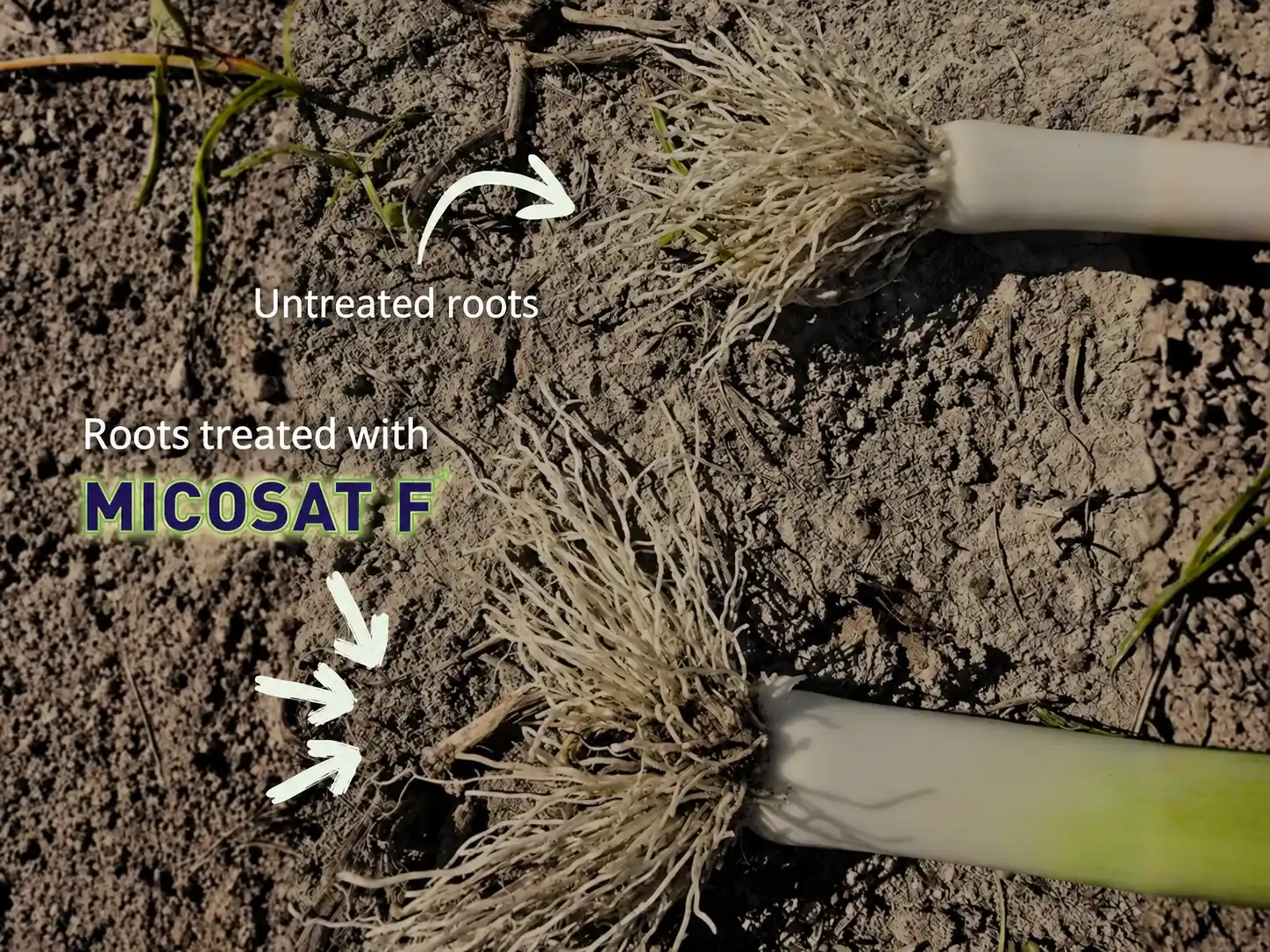
Root system development
thanks to the hyphal network that expands soil explorationBenefits for the plant
Benefits of mycorrhizae for the soil
Mycorrhizae improve the biological and structural fertility of the soil, making it more alive, stable, and productive.
Prevention and natural defense
An effective natural phytosanitary prevention strategy to reduce dependence on chemicals.
Root diseases
Biological antagonism between beneficial microorganisms and pathogens.
Tissue strengthening
Lignification and suberization for a strong physical barrier.
Systemic resistance
Induction of natural defenses through gene regulation.
Fewer iatrogenic diseases
Reduction of diseases caused by the improper use of agrochemicals.
Stop immunodepression
Revitalization of plants stressed by intensive farming systems.

Increase in agricultural production
The use of mycorrhizae allows for higher and more stable yields over time.
Improvement of harvest quality
Mycorrhizae have a positive impact on commercial and nutritional quality.

Healthiness and environmental sustainability
A fundamental contribution to healthier, safer, and cleaner agricultural production.